What are self-adhesive (pressure-sensitive) labels and how do they work?

Subscribe to our newsletter!Stay up to date, subscribe to our newsletter!
SubscribeUnderstanding RFID smart label RoHS compliance is key to ensuring product safety, regulatory compliance, and customer trust. In this guide, you will learn what it means, how it applies to RFID tags, and why it is essential for businesses operating globally.


RoHS compliance has become a cornerstone of global electronics manufacturing. For companies working with RFID technology, ensuring that every label and tag meets RoHS standards is no longer optional.
Without compliance, businesses risk restricted market access, product recalls, or damage to their brand reputation.
The challenge is that RFID smart labels are not just simple stickers. They integrate multiple materials and electronic components, each of which could introduce restricted substances.
Understanding how RFID smart label RoHS compliance works, can help manufacturers and buyers protect both consumers and supply chains.
The solution lies in partnering with trusted suppliers and validating compliance at every stage of production.
Through sourcing companies like Beontag, which provide verified RoHS-compliant RFID smart labels, businesses can streamline regulatory compliance and avoid costly issues.
Continue reading to explore how RoHS impacts RFID applications worldwide.
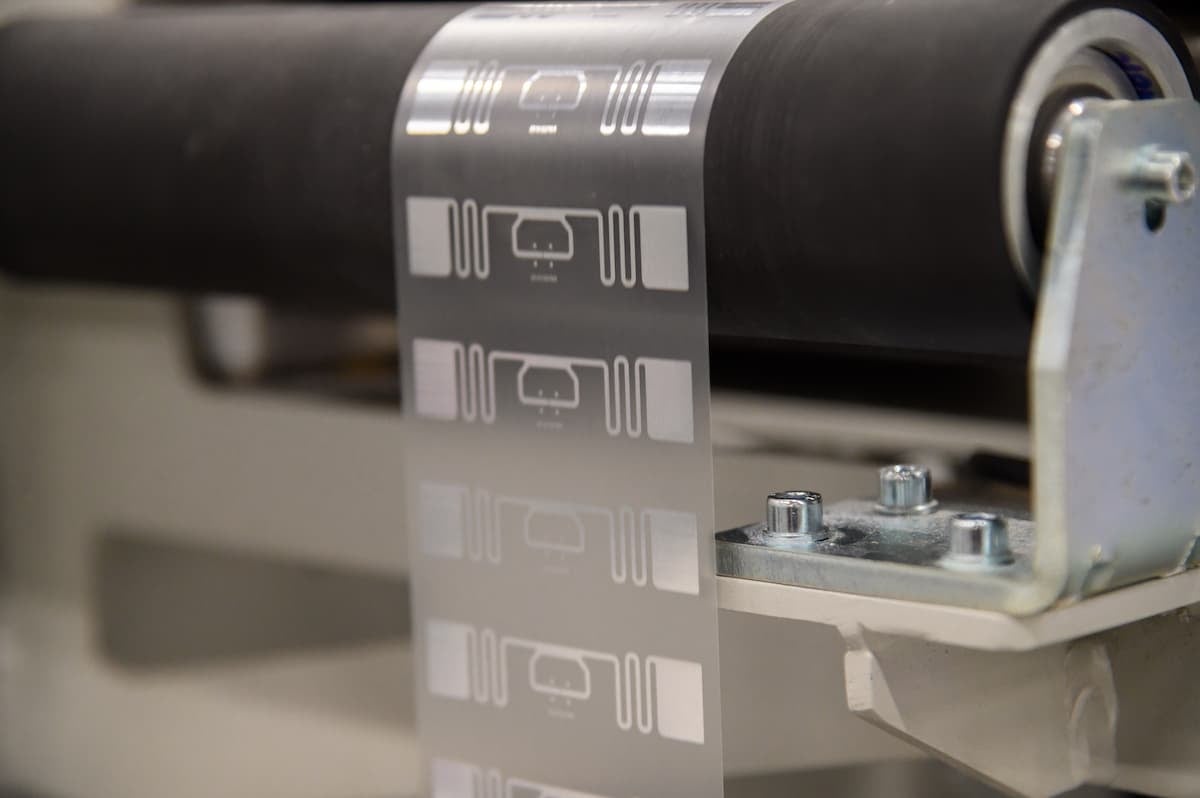
RoHS, short for Restriction of Hazardous Substances, is a European Union directive that restricts the use of certain harmful chemicals in electrical and electronic equipment.
For RFID smart label RoHS compliance, this means ensuring that every component of an RFID label meets strict chemical restrictions before it can be legally sold in EU markets.
RoHS matters for RFID technology because smart labels are not simply paper. They integrate chips, antennas, adhesives, and inks—all of which could contain substances that harm human health or the environment.
By complying with RoHS, businesses reduce environmental impact and build safer, more sustainable RFID applications.
Do labels need to be RoHS compliant? The answer is yes, whenever they are classified as electronic products entering regulated markets.
Since RFID labels integrate chips and circuits, they fall under the scope of RoHS requirements. Companies ignoring these rules risk penalties and being barred from selling products internationally.
Check out all the details about RFID tags and labels.
The RoHS directive sets limits for hazardous substances commonly used in electronics. The current restrictions include:
When sourcing RFID smart labels across global markets, buyers often face overlapping regulations.
While RoHS focuses on restricting specific hazardous substances, other frameworks such as REACH and California’s Proposition 65 introduce broader or region-specific requirements.
Understanding the differences between these regulations helps businesses ensure consistent compliance and avoid unexpected barriers in supply chains.
| Regulation | Scope | Focus | Impact on RFID labels |
| RoHS | EU directive | Restricts specific hazardous substances | Mandatory for electronic components, including RFID smart labels |
| REACH | EU regulation | Covers all chemicals and requires registration | Broader in scope, may affect adhesives and inks in labels |
| Prop 65 | California law | Requires warnings for products with listed chemicals | Impacts labels sold in the California market |
One common misconception is that RFID smart label RoHS compliance only means “lead-free.” While lead is indeed one of the restricted substances, RoHS addresses a wider range of hazardous materials, from mercury to flame retardants.
Simply labeling a product as lead-free does not guarantee RoHS compliance.
This confusion is important because buyers often assume “lead-free” equals global standards compliance.
But compliance requires documentation, supplier verification, and testing. RoHS-compliant RFID technology ensures not only reduced lead content but also the elimination of multiple harmful substances across different components.
For businesses sourcing RFID applications, it is critical to demand proper RoHS certification rather than relying on vague claims.
Without validated compliance, companies may face legal or financial consequences. Therefore, understanding this difference is vital for effective regulatory compliance.
RoHS compliance in RFID smart labels is not just about the chip. Each element of the label must be tested and verified against the directive.
From antennas to adhesives, all components could potentially introduce restricted substances if not properly sourced or manufactured.
Components to assess
Knowing these risk points helps buyers ask the right questions when sourcing RFID smart labels.
RoHS compliance requires controlling not just the obvious electronics but also the supporting materials.
A critical question for buyers is: how do I know if something is RoHS compliant? The answer lies in proper documentation.
Any legitimate supplier of RFID smart labels should provide datasheets referencing Directive 2011/65/EU and its amendment (EU) 2015/863, also known as RoHS 3.
Suppliers must issue a Declaration of Conformity confirming that products meet the required thresholds for restricted substances.
Without this documentation, buyers cannot be certain that the labels are compliant.
This is especially important for companies exporting RFID applications across global markets.
Is RoHS compliance mandatory? In the EU and many other markets, yes—it is legally required.
Even in regions where it is not mandated, many industries expect compliance as part of standard regulatory practices. Verifying compliance before purchase prevents costly disruptions later.
RoHS compliance is critical in industries where safety, sustainability, and global trade intersect.
For RFID technology, this includes sectors where labels are integral to tracking, authentication, or logistics.
Companies that ignore RoHS requirements risk being excluded from competitive international markets.
Healthcare is one major example, as hospitals use RFID smart labels to track medications, equipment, and patient care processes.
The presence of hazardous substances would be unacceptable in such sensitive environments.
Similarly, automotive and aerospace industries demand strict compliance to maintain global certifications.
Consumer electronics and retail supply chains also rely heavily on RFID applications. Large retailers expect suppliers to provide RoHS-compliant smart labels as part of broader sustainability commitments.
Meeting these standards ensures smooth integration and avoids complications during audits or inspections.
Beontag has positioned itself as a leader in providing RFID smart label RoHS compliance solutions.
Our portfolio covers a wide range of RFID applications, all designed and manufactured in accordance with international standards.
This gives customers confidence that every label they source supports both regulatory compliance and sustainability.
By integrating compliance into the design stage, we ensure that chips, antennas, adhesives, and inks meet RoHS thresholds.
This proactive approach reduces risks for clients while streamlining procurement.
Buyers no longer need to question whether their labels are compliant—documentation and certifications are readily available.
Partnering with Beontag means more than just meeting regulations. It also means gaining access to innovation, consistent quality, and reliable customer support.
This combination makes Beontag a trusted partner for businesses that require safe, sustainable, and globally compliant RFID technology.
RoHS compliance is not just a box to check. It is a commitment to safer, cleaner, and more responsible manufacturing.
For businesses depending on RFID applications, partnering with a trusted supplier ensures seamless global market access and avoids costly compliance risks.
Beontag’s RoHS-compliant RFID smart label portfolio gives companies peace of mind.
Whether you operate in healthcare, retail, logistics, or other industries, Beontag’s solutions combine performance with verified regulatory compliance.
Visit our catalog to discover reliable solutions or contact us now for personalized results.