What are self-adhesive (pressure-sensitive) labels and how do they work?

Subscribe to our newsletter!Stay up to date, subscribe to our newsletter!
SubscribeHot melt and water-based adhesives serve different label needs depending on performance, environment, sustainability, and application speed. The right adhesive depends on substrate, use conditions, and supply chain demands. Explore the details.


Labels are critical communication and tracking tools across industries, from retail and logistics to healthcare and food. Adhesive selection directly affects label durability, readability, compliance, and performance throughout the product lifecycle. Choosing incorrectly can lead to label failure, rework, waste, and even compliance risks.
The challenge is that hot melt and water-based adhesives may appear interchangeable at first glance, yet their behaviors differ significantly under temperature changes, moisture exposure, line speed demands, and sustainability requirements. These differences become even more relevant as RFID-enabled labels expand supply chain visibility and cold chain monitoring.
The solution is understanding how each adhesive works, where it performs best, and how material expertise supports smarter decisions. Continue reading to compare technologies, explore real-world use cases, and see how Beontag’s adhesive materials help brands build reliable, future-ready labeling solutions.

At a high level, hot melt and water-based adhesives differ in chemistry, application method, and performance profile. These distinctions influence bonding strength, setting time, temperature resistance, and environmental impact. Understanding these fundamentals helps label converters and brand owners align adhesive selection with operational and regulatory requirements.
Hot Melt adhesives are thermoplastic materials applied in a molten state and solidify as they cool. This physical bonding process delivers fast setting times and strong initial track, making Hot Melt adhesives ideal for high-speed labeling lines and demanding applications requiring immediate adhesion consistency.
Hot Melt formulations are solvent-free and rely on controlled heat during application. Once cooled, they create durable bonds across various substrates, including plastics and coated paper. This performance recognizes hot melt as a reliable solution in fast-moving supply chains where efficiency and uptime are critical.
Hot melt dominates high-speed packaging, logistics, and cold environments.
Water-based adhesives use water as a carrier to disperse polymers, bonding as water evaporates. This process enables excellent clarity, smooth lay-flat performance, and flexibility, particularly on paper-based substrates. Water-based systems are often associated with lower application temperatures and environmental advantages.
Because curing depends on evaporation, water-based adhesives may require longer setting times. However, they provide strong adhesion in controlled environments and are widely used where sustainability, recyclability, and regulatory compliance are key priorities for label applications.
Water-based solutions support premium branding, paper labels, and sustainability-focused markets.
Hot melt and water-based adhesives are used across a wide range of label applications, depending on performance requirements and production conditions. Hot Melt adhesives are common in high-speed operations, logistics labeling, and plastic packaging, where fast bonding and resistance to temperature variation are essential.
Water-based adhesives are more frequently used in paper labels, glass containers, and consumer goods requiring smooth lay-flat appearance and visual consistency. They perform best in controlled environments, supporting applications where sustainability goals, regulatory alignment, and aesthetic quality are as important as reliable adhesion.
Both adhesive types play a complementary role in modern labeling strategies. Rather than competing directly, hot melt and water-based adhesives are selected based on substrate compatibility, application environment, and lifecycle expectations, ensuring labels remain functional from application to end use.
See all Beontag’s applications for Graphic and Label Materials.
Hot Melt adhesives are widely adopted, allowing consistent performance under demanding conditions. Their fast bonding and versatility support industries requiring speed, durability, and resilience. For labels that must endure temperature fluctuations, handling stress, and logistics complexity, hot melt adhesives deliver dependable results.
It is a solid material heated until molten, applied to the label substrate, and bonded upon cooling. This process creates immediate adhesion without evaporation or curing delays, making it suitable for automated, high-speed labeling environments.
In label constructions, hot melt adhesives maintain bond strength even on challenging surfaces. This reliability supports RFID in the supply chain, where label attachment is essential to ensure accurate data capture and uninterrupted tracking performance.
Hot Melt adhesives offer compelling advantages but also present trade-offs. Understanding both sides enables smarter material selection based on operational realities, end-use conditions, and sustainability goals.
| Pros of Hot Melt Adhesives | Cons / Limitations of Hot Melt Adhesives |
| Fast setting and high initial tack | Higher application temperatures |
| Excellent performance in cold environments | Limited repositionability |
| Strong adhesion to plastics and films | Can be less suitable for premium paper aesthetics |
| High-speed line compatibility | Recycling challenges in some scenarios |
Hot Melt adhesives are commonly used in logistics labels, retail price labels, and packaging requiring immediate adhesion. They perform well on plastic containers, corrugated boxes, and shrink-wrapped products exposed to varying temperatures.
Water-based adhesives are valued for their balance of performance, appearance, and sustainability. They support applications where environmental considerations, clarity, and smooth application matter most. In controlled conditions, these adhesives deliver reliable bonding and premium label aesthetics.
Water-based adhesives consist of polymers dispersed in water, bonding as moisture evaporates. This mechanism allows lower application temperatures and reduces energy consumption during label production.
For label converters, water-based adhesives offer process flexibility and compatibility with paper substrates. They are frequently chosen for labels requiring recyclability alignment and regulatory compliance in consumer-facing industries.
These adhesives present distinct advantages and constraints. Evaluating these factors ensures the adhesive aligns with performance expectations and environmental conditions.
| Pros of Water-Based Adhesives | Cons / Limitations of Water-Based Adhesives |
| Lower application temperatures | Slower setting times |
| Strong performance on paper | Reduced cold-temperature resistance |
| Better recyclability profiles | Sensitivity to humidity and temperature |
| Smooth, clear label appearance | Lower initial tack on some substrates |
Water-based adhesives are widely used in food, beverage, and personal care labeling, especially on glass and paper packaging. Their clarity enhances branding while supporting sustainability initiatives.
Comparing hot melt and water-based adhesives side by side highlights that no single solution fits all label needs. Each technology excels in specific contexts, reinforcing the importance of application-driven decision-making rather than universal preferences.
| Criteria | Hot Melt Adhesives | Water-Based Adhesives |
| Setting speed | Very fast | Moderate |
| Cold performance | Excellent | Limited |
| Sustainability focus | Moderate | Strong |
| Substrate flexibility | High | Lower |
| Line speed compatibility | High | Medium |
This overview supports faster evaluation while emphasizing that the “best” adhesive depends on the environment, substrate, and lifecycle requirements. Strategic selection improves performance, reduces waste, and supports long-term labeling reliability.
Selecting the right adhesive requires analyzing technical, operational, and regulatory factors together. Label performance does not exist in isolation; it interacts with substrates, production lines, and end-use conditions throughout the supply chain.
Considering technical, operational, and sustainability factors together allows organizations to align adhesive performance with real-world demands. The following criteria highlight the most important elements to assess when deciding which adhesive technology best supports specific label applications.
Substrate compatibility is one of the most critical factors influencing adhesive performance. Plastics, films, coated papers, and uncoated paper each interact differently with hot melt and water-based adhesives, affecting wet-out, tack, and long-term bond strength under real handling conditions.
Label construction adds another layer of complexity. Facestock thickness, surface coatings, liners, and embedded components such as RFID inlays can influence how an adhesive performs. An incompatible adhesive may reduce adhesion of uniformity or interfere with consistent RFID signal readability.
Specialist material selection ensures that the adhesive integrates seamlessly into the label structure. By focusing on the adhesive layer, Beontag supports converters in optimizing compatibility across substrates while maintaining performance consistency across high-volume and specialized labeling applications.
The environment in which a label is applied and used has a direct impact on adhesive performance. Temperature fluctuations, humidity, condensation, and physical handling can stress the adhesive bond, particularly in logistics, food, pharmaceutical, and industrial supply chains.
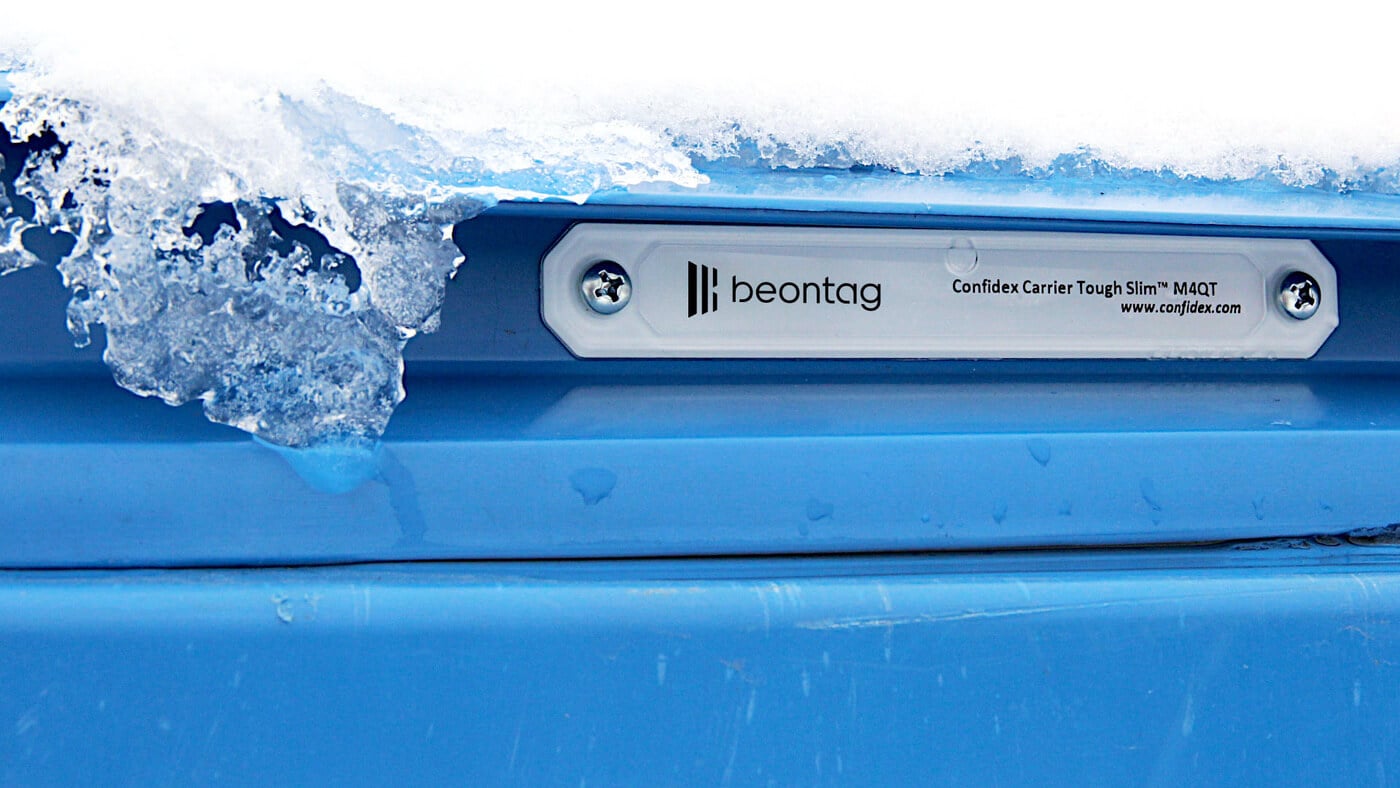
Hot Melt adhesives typically perform better in cold or variable environments, making them suitable for refrigerated and frozen products. This reliability is essential for cold chain operations.
Water-based adhesives perform best in stable, ambient environments where moisture and extreme temperatures are controlled. Understanding these environmental conditions upfront helps prevent label failure, detachment, or data loss during transportation, storage, and point-of-sale handling.
Production speed and application methods significantly influence adhesive choice. High-speed labeling lines demand fast-setting adhesives that bond instantly, reducing downtime and ensuring consistent placement accuracy across thousands or millions of labels per day.
Hot Melt adhesives are well suited for automated, high-throughput operations because they set immediately upon cooling. This makes them ideal for logistics labels, variable data labels, and RFID-enabled supply chain applications where efficiency and uptime are critical.
Water-based adhesives may require longer drying times, making them more suitable for moderate-speed lines. Aligning adhesive behavior with equipment capabilities ensures smooth operations without compromising label quality or production efficiency.
Different applications require different lifecycle behaviors. Some labels must remain permanently attached, while others require clean removability without residue. Adhesive choice directly affects how labels perform during use, reuse, recycling, or disposal.
In the supply chain, adhesive durability is essential. If a label detaches or degrades before the product completes its journey, tracking data becomes unreliable, affecting inventory accuracy and operational visibility across the network.
Evaluating lifecycle expectations ensures that the adhesive supports both functional and operational goals. Material expertise helps balance adhesion strength, removability, and long-term performance based on the specific use case.
Sustainability has become a decisive factor in adhesive selection. Water-based adhesives are often favored for their recyclability compatibility and lower environmental impact, especially in paper-based label constructions aligned with circular economy initiatives.
However, sustainability must be balanced with performance. In some applications, hot melt adhesives deliver longer-lasting labels that reduce waste caused by reapplication or product loss, indirectly supporting sustainability objectives.
Regulatory requirements also influence adhesive selection, particularly in food, healthcare, and consumer goods. Working with a material specialist like Beontag helps ensure adhesive solutions align with evolving environmental and compliance standards.
Get to know Beontag’s Sustainable products and goals for ESG strategies.
Understanding theory is important, but real-world examples clarify how adhesive decisions play out in practice. Hot melt and water-based adhesives each excel in specific scenarios. As mentioned before, depending on environmental exposure, production demands, and performance expectations.
Rather than seeking a universal solution, successful labeling strategies match adhesive technology to application context. This approach reduces risk, improves reliability, and supports advanced use cases.
The examples below illustrate common situations where one adhesive technology typically outperforms the other, helping guide more confident and informed decision-making.
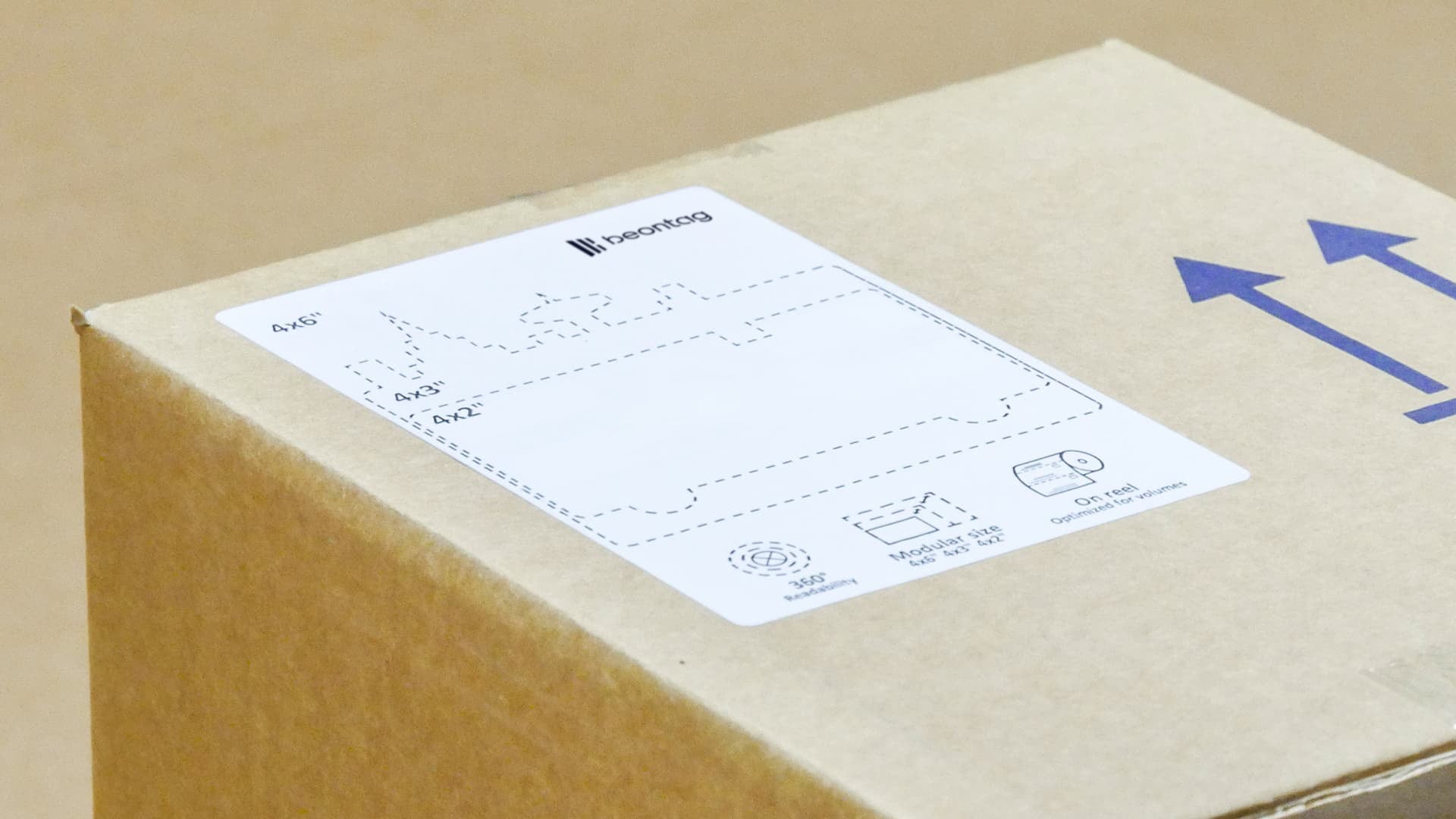
Hot Melt adhesives are typically preferred in high-speed logistics, e-commerce, and distribution environments. Their fast-setting time and strong initial tack support reliable label adhesion on cartons, plastics, and shrink-wrapped products moving rapidly through automated systems.
They are especially effective in cold chain applications, where labels must remain attached in refrigerated or frozen conditions. Hot Melt adhesives are also well suited for environments with humidity, condensation, or frequent handling, where water-based systems may struggle to maintain consistent bonding performance.
Water-based adhesives are often the better fit for paper labels, glass containers, and applications prioritizing sustainability and visual quality. Their smooth lay-flat behavior and clarity enhance branding and consumer-facing aesthetics.
They perform well in controlled, ambient environments such as retail shelves, personal care products, and dry food packaging. In these conditions, water-based adhesives deliver reliable adhesion without the need for extreme temperature resistance. Water-based adhesives can also support consistent label performance while aligning with recyclability and regulatory goals.
See more of Beontag’s use case with Graphic and Label Materials.
Choosing the right adhesive is rarely a simple comparison between hot melt and water-based technologies. It requires understanding how materials behave across substrates, processes, environments, and lifecycles, especially as labels evolve into data carriers within connected supply chains.
A specialist partner brings material expertise that bridges theory and application. By focusing on the adhesive layer, specialists help converters and brands avoid performance issues that can compromise label durability.
Choosing the right adhesive is not just a technical decision, but a strategic one that impacts label performance, supply chain efficiency, and data reliability. Hot melt and water-based adhesives each serve different contexts, and understanding these nuances ensures labels remain attached, readable, and functional throughout their intended lifecycle.
With deep expertise in adhesive materials for labels, Beontag supports converters and brands by supplying high-performance adhesive solutions tailored to real-world demands. By focusing on the adhesive layer, Beontag helps transform label foundations into a competitive advantage.
Check out our full portfolio for Graphics and Label Materials and contact us for personalized solutions.