





RFID/IoT
GLM
Thermal paper is a special fine paper coated to react to heat, used in printers like POS and labels....
Stay up to date, subscribe to our newsletter!
SubscribeRFID Asset Tracking enables automatic, precise tracking of valuable resources using radio frequency, plus the key advantages businesses gain. Keep reading for full technical insight and real-world use cases.


In today’s fast-moving world, companies struggle to keep tabs on their physical assets. Misplaced tools, unrecorded movements, theft, and manual reconciliation all erode operational efficiency. The solution is RFID Asset Tracking, which digitizes asset visibility and reduces labor.
Many organizations try manual logs or barcode scanning. That leads to errors, delays, and lack of real-time insight, especially when assets move across departments or facilities. When critical equipment vanishes or is misused, downtime and replacement costs skyrocket. Stakeholders lack confidence in their asset data, inhibiting decisions. Something must change.
The solution lies in integrating RFID Asset Tracking across all operations. By combining RFID tags, readers, and data management software, companies can automate asset visibility, streamline audits, and ensure full accountability. Continue reading to explore how this system works in practice, compare available options, and understand the value it brings to real-world deployments.

RFID Asset Tracking refers to the process of associating physical assets (tools, equipment, IT, containers) with electronic tags and using radio frequency to monitor their location, status, or movement. It moves beyond manual logging or barcode scans by enabling non-line-of-sight, bulk reading of tags. This technology is increasingly adopted in manufacturing, healthcare, logistics, and other asset-intensive domains.
Because each asset carries a unique identifier, a system can unify the digital profile and actual physical presence of every item. You can then query your database to answer “where is asset X?” or “when was it last moved?” The real power is real-time updates powered by RFID readers detecting movements.
RFID Asset Tracking is thus a form of automatic identification and data capture (AIDC). Unlike barcodes, it doesn’t require direct line-of-sight, and it can read multiple tags in a field simultaneously. The result: faster inventories, continuous visibility, and stronger control over assets across complex environments.
The technology combines radio frequency identification, smart tags, and connected software to automatically capture asset data without manual input. Let’s explore the key components, workflows, and technologies that make this system reliable, scalable, and efficient for modern businesses.
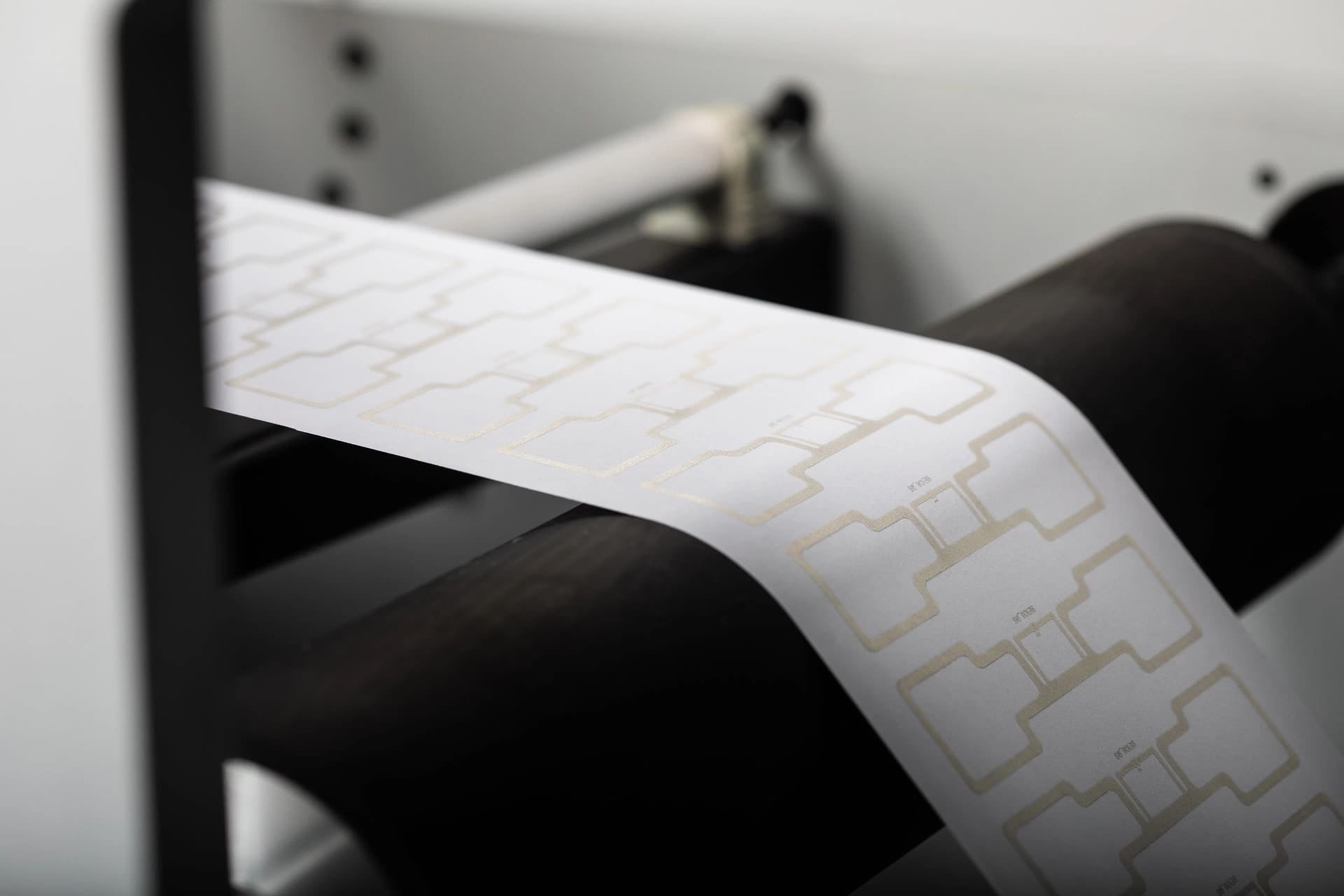
A functional RFID Asset Tracking system includes several components:
The tags can be passive (powered by reader energy), semi-passive, or active (battery-powered). Passive tags are more common in asset tracking because of their lower cost and longer lifespans.
Fixed readers are installed strategically (e.g. by doorways, ports, shelves) to detect passing tags. Handheld readers (often mobile computers with RFID) are used for spot checks, audits, or areas not covered by fixed readers.
Middleware filters raw reads (removing duplicates or noise), then sends clean events into software systems. The software tracks asset histories, reports on anomalies, triggers alerts, and provides dashboards to operations teams.
There are variations in how RFID Asset Tracking is deployed depending on context:
Thus, companies can tailor a system using hand-held audits, fixed reads in corridors, or full-blown RTLS if fine-grained location is required. Flexibility is a major strength.
If you want to understand more about RFID technology, check our blog:
What are RFID Tags? Understanding Their Function and Uses
Privacy Concerns? What You Need to Know About RFID tag and Security
RFID Tag Types (UHF, HF, LF): Which One to Choose for Your Application
Businesses adopting RFID Asset Tracking quickly achieve ROI through operational gains, reduced losses, improved accuracy, and stronger accountability.
Manual asset audits, logging, and tracking consume significant labor hours. RFID enables bulk reading of hundreds of tags in seconds without direct line-of-sight. Employees can scan entire rooms from a distance, minimizing manual effort and walking time.
Operational workflows like checking in tools, transferring equipment, or moving assets between facilities become nearly instantaneous. Bottlenecks disappear, and staff no longer spend hours reconciling spreadsheets of missing items.
One of the biggest costs for asset-heavy operations is loss or theft. Ghost assets — items recorded but no longer present — weaken capital efficiency. RFID Asset Tracking ensures continuous visibility of asset locations and conditions, reducing the risk of misplacement or misuse.
By capturing detailed usage patterns, organizations can redeploy underutilized assets, decommission redundant ones, and optimize inventory, cutting unnecessary purchases or surpluses.
Human error in manual entry or barcode scanning is inevitable. Incorrect counts or skipped records can lead to major discrepancies. RFID minimizes these risks through automated capture and minimal human intervention.
Accurate, traceable data supports compliance audits, financial reporting, and insurance validation — ensuring organizations always have a reliable record of asset movements and usage.
Traditional tracking methods offer only periodic snapshots. RFID provides continuous, real-time visibility of asset locations, status changes, and movement trends.
This level of transparency transforms asset management from reactive to strategic — enabling better maintenance planning, forecasting, and resource allocation.
RFID systems are inherently scalable. Businesses can start small — tagging only key assets — and expand over time as needs evolve. Because these systems integrate easily with enterprise platforms like ERP, CMMS, and asset management software, scaling doesn’t require major IT restructuring.
Reliable RFID Integration for Any Environment
Whether deployed in industrial sites, hospitals, or logistics hubs, the success of an RFID system depends on the quality and durability of its tags.
Beontag’s RFID tags and labels are engineered for compatibility across diverse reader systems and conditions, ensuring consistent performance and seamless scalability in any environment.
See more about Beontag’s RFID tags and labels.
When selecting an RFID Asset Tracking solution, not all systems are equal. Key comparison dimensions include tag type, read range, cost, power requirements, deployment complexity, and environmental suitability. Below are three archetypes for comparison:
| Type of System | Tag Type (Passive / Active) | Read Range | Power | Use Cases | Cost / Complexity |
| Basic passive RFID system | Mostly passive UHF tags | ~1–10 m depending on antenna | No battery (powered by reader) | Indoor assets, tools, IT, warehouse | Lower cost, simpler installation |
| Active / semi-passive RFID / RTLS | Active or battery-assisted tags | Tens to hundreds of meters | Battery-powered or hybrid | Large outdoor assets, real-time tracking | Higher cost, more complex network |
| Hybrid / sensor-enhanced RFID | Tags with sensors or memory | Varies | Battery-assisted or active | Condition monitoring (temp, vibration) | High cost, specialized for critical assets |
Interpretation & selection guidance
When considering technology choices, asset managers often ask whether to stick with barcode or migrate fully to RFID. Barcode systems have long been used for inventory and asset management. They require manual scanning and line-of-sight, which introduces labor and error risk.
RFID overcomes many of those constraints but carries its own costs and deployment demands. The decision is not binary — in many environments, hybrid usage persists.
See the outlines strengths and weaknesses of each for asset tracking:
| Feature | Barcode | RFID (Asset Tracking) |
| Line-of-sight requirement | Must be visible and directly oriented | No line-of-sight needed; tags can be hidden |
| Speed / bulk reads | One tag at a time | Multiple tags can be read simultaneously |
| Automation | Largely manual scanning | Automated reads via fixed and handheld readers |
| Read range | Very limited (few cm) | Ranges from meters to tens/hundreds of meters (depending on type) |
| Durability in harsh environments | Vulnerable (labels scratch, fade) | Rugged tags resist heat, moisture, chemicals |
| Cost per tag | Very low | Moderate (especially for passive tags) |
| Integration effort | Simple systems | More infrastructure required (antennas, readers, middleware) |
| Scalability | Scales poorly for large volumes | Scales well for high volume, fast operations |
| Data capacity & re-write | Limited, static | Can store more data and be rewritten with new info |
In summary, for low-cost, low-volume use (e.g. occasional audits or simple environments) barcode systems may suffice. But for dynamic, high-volume, multi-location operations, RFID Asset Tracking outpaces barcode in throughput, automation, and long-term ROI. Mix-and-match deployments are common, but the trend leans toward RFID’s superior automation and insight capabilities.
Below are some illustrative cases, demonstrating how technology takes shape in real world scenarios.
Dutch rail company Voestalpine installed a passive RFID solution to monitor the condition, status, and location of rail wagons and components. The system lets them detect wheel defects via combined sensor and RFID data and centralize maintenance cycles.
Because Beontag tags are rugged and reliable, Voestalpine reduced dependency on powered tags and achieved lower cost per unit. The result: improved safety, richer visibility, and reduced operational risk.
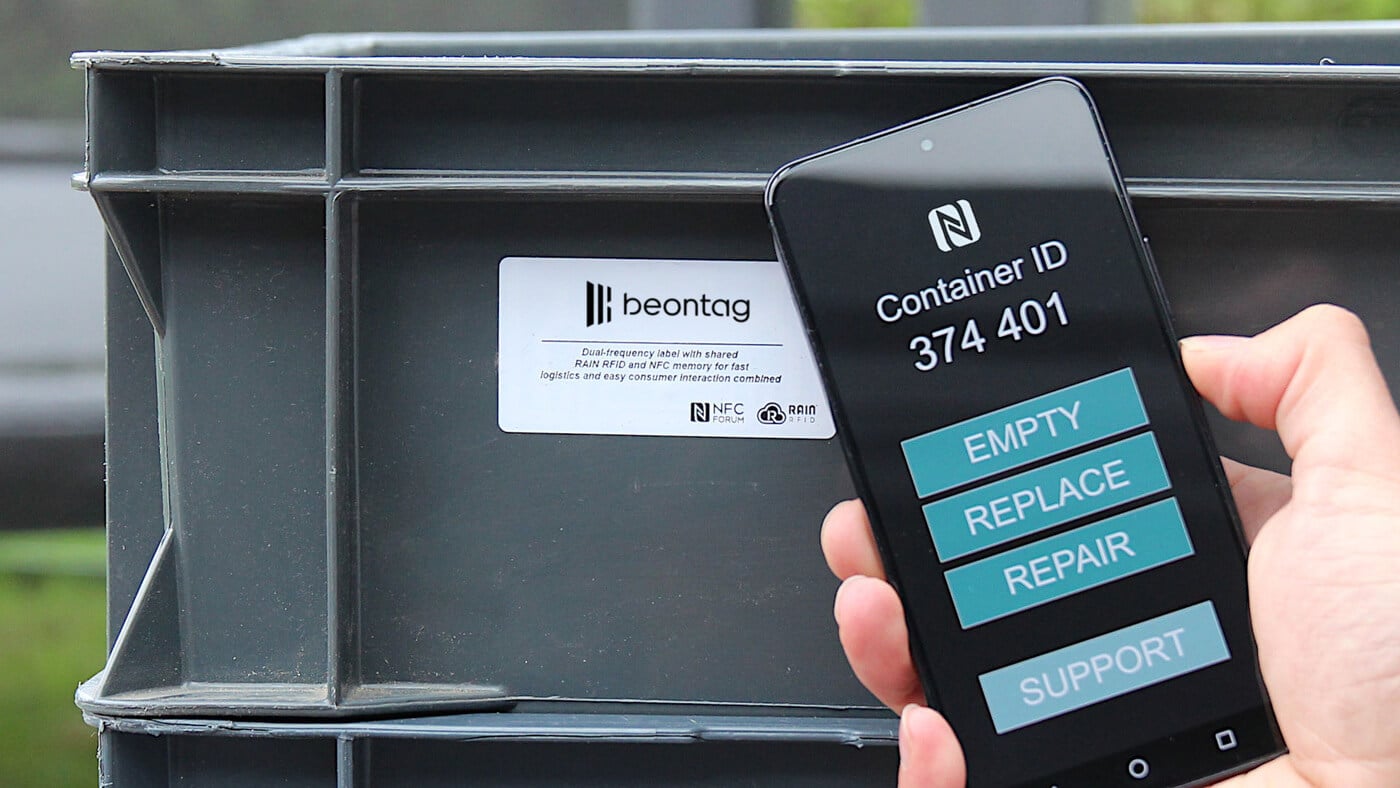
CHEP partnered with Beontag’s Confidex labels to enable real-time tracking of returnable containers (RTIs). The system tracks assets throughout the supply chain, reduces bottlenecks, and minimizes loss or damage.
Because Beontag optimized adhesives and tag materials, durability in transit, handling, and environmental exposure were assured. Clients get “all the way down the chain” visibility.
DENSO adopted Beontag’s Confidex Silverline Blade tags for their on-metal electronics and devices. These tags support up to ~4.5 m read range even on metal surfaces.
Using those tags, electronics and small assets within IT fleets become easy to audit and locate — even in dense racks or crowded environments.
Rental asset firm Aucxis deployed Beontag’s Ironside Slim on-metal tags to track audio/video equipment used in live events. The form factor suited diverse shapes and provided excellent reading performance even under challenging conditions.
In sum, these cases show how RFID Asset Tracking — when backed by robust tag engineering (as Beontag offers) can excel in rail, supply chain, IT, event, and industrial contexts.
While the benefits are strong, successful implementation of RFID Asset Tracking requires addressing practical challenges. Below are key considerations and mitigation strategies.
Metal surfaces, liquids, electromagnetic noise, and interference can degrade RFID read performance. Standard tags may detune or reflect signals incorrectly near metal.
The solution is to use metal-tolerant tags and those designed for harsh conditions. Beontag’s portfolio includes tags optimized for difficult substrates, including usage of advanced IC chips to enhance reliability.
Before full rollout, perform site surveys and “RFID proofs-of-concept” to measure expected read rates in real layouts and adjust placement of readers and antennas.
Tags may peel off, become damaged, or get physically knocked off. That undermines tracking integrity.
Mitigations include selecting durable materials and adhesives (as Beontag does for industrial labels), embedding protective overlays, and planning periodic checks. Also, detectors should flag missing tags or no-read events for investigation.
Compared to barcode, RFID demands investment in readers, antennas, middleware, and integration. Some businesses balk at that cost.
To mitigate, begin with pilot deployments on high-value assets or critical zones, measure ROI, then scale. Because RFID scales, incremental expansion helps avoid overcommitment. Also, choose modular systems and invest in flexible middleware that can integrate with your existing systems.
RFID can generate massive volumes of raw read events (duplicates, noise). Without proper filtering, backend systems may become overwhelmed or polluted with erroneous data.
Ensure middleware and software support real-time filtering, de-duplication, aggregation, event rules (e.g. “only log first entry per minute”). Work with vendors (such as Beontag partners) to design data pipelines that handle your read density without lag.
Introducing RFID means staff need training, processes change, and culture shifts. Resistance may arise from legacy habits or fear of automation.
Counter this by starting with pilot zones, training teams, demonstrating quick, and embedding RFID outcomes into KPI goals. Involve stakeholders early, show dashboards, and emphasize how the system eases their workload.
If you're ready to elevate your asset management, it’s time to explore Beontag’s RFID Asset Tracking solutions. From rugged industrial tags to integrated middleware, Beontag ensures you get reliable, scalable, and high-performance tracking.
Contact for trial tags in your environment, map reader placement, and start your journey toward operational excellence. Visit our catalog and contact us now for personalized solutions.
RFID/IoT
GLM
Thermal paper is a special fine paper coated to react to heat, used in printers like POS and labels....
RFID/IoT
GLM
RFID/IoT
GLM
RFID technology allows for data collection with less time and effort compared to the bar code system...

RFID/IoT
GLM
Beontag offers a wide range of products specifically designed to meet the requirements of this secto...


RFID/IoT
Did you know that there is no universal adhesive that is used in all applications?

RFID/IoT
GLM
Have you ever wondered what our purchases would be like if the products didn’t have labels?

RFID/IoT
GLM
RFID Technology: Innovation and greater control for your business!